Overview
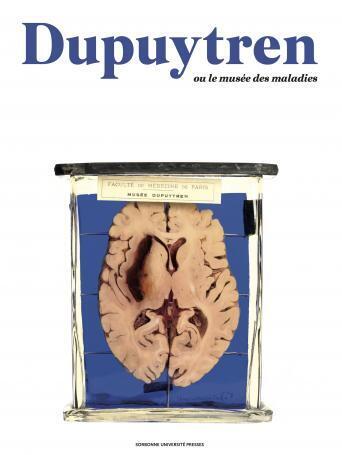
Created in 1835, the Dupuytren Museum closed its doors in 2016, and its collections were transferred to the Faculty of Sciences at Sorbonne University. This museum of pathological anatomy quickly gained great fame, exceeding its original purpose as an institution for the dissemination of medical knowledge. In the twentieth century, its scientific value declined, and, as with most anatomy museums, the majority of its visitors were curious laypeople, artists, and a few historians of science. Yet the collection remains remarkably significant from multiple perspectives, beginning with its heritage value and the imaginary associated with it.
This book offers a multidisciplinary perspective on the Dupuytren Museum, combining historical, epistemological, philosophical, and aesthetic approaches. It seeks to show how such a collection – which brings together anatomical specimens (human remains and casts), scientific instruments, works of art (paintings, engravings, photographs), and also a library – constitutes a prime resource for studying the ways in which physicians, artists, philosophers, but also surgeons, military doctors, midwives, writers, and, more generally, art and science enthusiasts have interacted and confronted each other since the nineteenth century around anatomical collections and the study of diseases. The book also examines the role a museum of diseases can play, as well as how the preservation of past pathologies can contribute to the prevention and anticipation of future illnesses.
The Authors
Julie Cheminaud is Associate Professor of Philosophy at Sorbonne University. A former student of the École Normale Supérieure and agrégée, and a former resident of the French Academy in Rome-Villa Medici, she is the author of Évadés de la médecine (Vrin, 2018) and various articles on the relationship between art and medicine.
Claire Crignon is Professor of History and Philosophy of Medical Sciences at the University of Lorraine. She co-founded the Master’s program and the Biomedical Humanities Initiative with Alexandre Escargueil at Sorbonne University. She has published several works combining the history of British philosophy with the history of medical sciences, or linking the history of philosophy and medicine with anthropology.