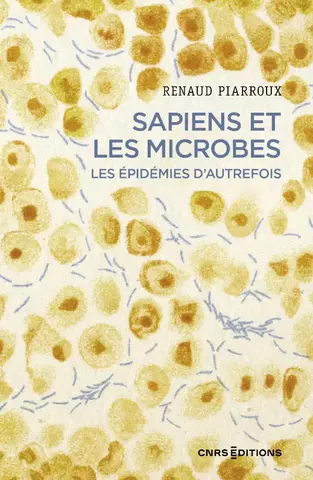
History books, often centered on great men and national narratives, generally overlook an invisible yet powerful actor: microbes. Yet these tiny organisms have played a decisive role in the fate of human societies.
This book tells this epic: that of contagious diseases which, from tuberculosis to influenza, and including smallpox, plague, or cholera, have emerged over the centuries to redraw the map of the world. Microbes offer a unique perspective on our history, so much have they influenced the rise and fall of cities, decided the outcomes of wars, shattered entire civilizations, and erected barriers that even the most powerful empires could not overcome. African diseases, formidable for Europeans, long acted as a barrier to colonization, while, conversely, epidemics originating in Europe decimated Indigenous populations, paving the way for the conquest of the New World.
The book also explores how epidemics were perceived and narrated, as well as the reactions they provoked: medieval quarantine measures, colonial medicine prevention campaigns, social and political upheavals… all the way up to the early twentieth century, when science began to lift the veil on our invisible enemies. The Spanish flu, which appeared in the wake of World War I, can thus be seen as the last pandemic before humanity had the tools to attempt to protect itself.
About the Author
Renaud Piarroux is Professor at Sorbonne University – Pitié Salpêtrière Hospital. He is also Head of the Department of Parasitology and Mycology at Pitié Salpêtrière Hospital and the author of numerous books, including Cholera. Haiti 2010-2018: History of a Disaster (CNRS Éditions, 2019) and Sapiens and Microbes (CNRS Éditions, 2025).