
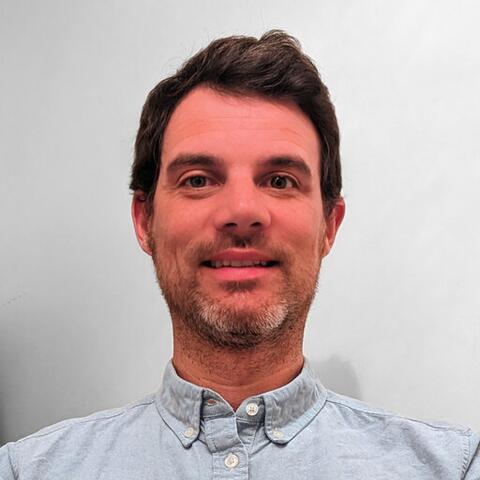
Mathieu Hautefeuille
Professor of Developmental Biology at Sorbonne University
Membre permanent en enseignement et recherche
Career
Mathieu Hautefeuille is a university professor at Sorbonne University within the Paris-Seine Institute of Biology (IBPS), where he heads the team on “Dynamic and multi-scale processes of spontaneous organisation in tissue morphogenesis.” At the interface between developmental biology, biophysics and bioengineering, his research aims to understand how tissues organise themselves spontaneously to form functional structures during development and in tissue repair processes.
Trained as an engineer and physicist, he has forged an original scientific career at the crossroads of the life sciences and engineering sciences. Before joining Sorbonne University in 2021, he spent a significant part of his career at the Universidad Nacional Autónoma de México (UNAM), where he established and led several research programmes focusing on biomedical microtechnologies, biomaterials and microfluidic systems applied to biology.
His research focuses on the physical and biological mechanisms that govern tissue morphogenesis, the formation of vascular networks and the collective organisation of cells. In particular, he develops innovative microphysiological systems, including ‘organ-on-chip’ models, in order to reproduce the complexity of living tissues in vitro and to study their functional properties under controlled conditions.
At the IBPS, he leads research integrating biomaterials, microfabrication, cell mechanics and developmental biology. His team is particularly interested in the role of mechanical stresses and cellular interactions in tissue self-organisation, as well as in the development of experimental models to better understand the physiological and pathological processes involved in vascularisation, tissue regeneration and certain chronic diseases.
Alongside his research activities, he plays an active role in the training of students in developmental biology and bioengineering. His work helps to bridge the gap between fundamental biology, biomedical engineering and translational medicine, with a view to developing new experimental models for health research.