
Editor’s Note
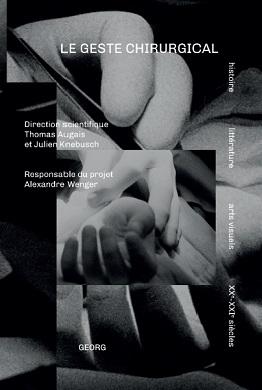
By bringing together perspectives from several disciplines – history, literature, philosophy, and the visual arts (from the first surgical films to contemporary television series) – this volume proposes to explore, through the notion of gesture, the stakes of contemporary surgery.
The spread, at the end of the nineteenth century, of the “three A” revolution (Anesthesia, Antisepsis, Asepsis) marked the beginning of a triumphant era for surgery and profoundly reshaped the very conception of the surgical operation. The “always-cutting fathers” denounced by Octave Mirbeau gave way to surgeons who relied less on the wrist – symbol of forceful intervention – and more on the fingers, seeking to perform procedures as gently as possible, sparing the patient’s blood. Surgery asserted itself as an art of the thinking hand, a sensitive approach to the body that, depending on geographical context, developed into distinct schools and styles, with masters comparable to those of painting.
What does surgery become in the twenty-first century, with the arrival of “minimally invasive” techniques and tele-surgery? By combining insights from multiple disciplines – history, literature, philosophy, and the visual arts (from early surgical films to television series) – this volume seeks to illuminate, through the surgical gesture, the challenges of contemporary surgery.