
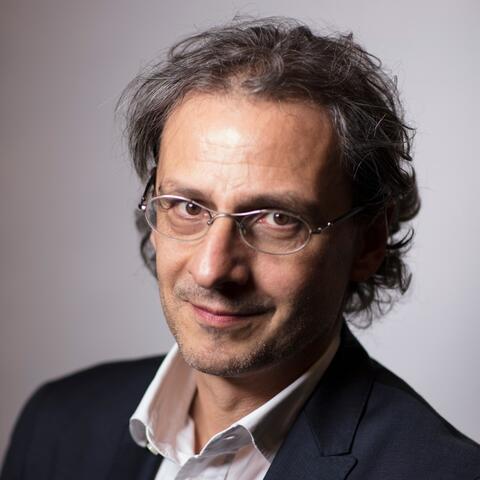
Pierre-Henri Tavoillot
Associate Professor (HDR) of Philosophy at Sorbonne University
Membre permanent en enseignement et recherche
Career
Pierre-Henri Tavoillot is an Associate Professor of Philosophy (Habilitation to Supervise Research, HDR) at Sorbonne University, within the Faculty of Philosophy and the Sciences, Normes, Démocratie (SND, UMR 8011) research unit. His work is primarily situated in the fields of political philosophy and ethics, with a particular focus on democracy, authority, and the formation of individuals in contemporary societies.
Trained in classical and modern philosophy, he devoted his early research to Enlightenment thought and Kantian philosophy before progressively broadening his work to examine the contemporary transformations of democratic systems. His research has been structured around two main themes: first, a philosophical and social reflection on the "stages of life," exploring childhood, education, adulthood, and aging; and second, an analysis of the nature of authority and political legitimacy in modern democracies.
He is the author of several books on these topics, examining the conditions that make political action possible, the tensions between individual autonomy and the collective framework, and the evolving relationships between generations in contemporary societies. His work has made significant contributions to debates on civic education, intergenerational transmission, and democratic responsibility.
Alongside his teaching and research activities, he has held several institutional responsibilities, including founding and directing the University Diploma program Secularism Officer: Managing Religious Issues at Sorbonne University. He also serves as President of the Collège de Philosophie and participates in several advisory bodies dedicated to educational policy and major societal issues.
His work seeks to illuminate the intellectual and normative foundations of contemporary democratic life by examining the balance between individual freedom, political authority, and social cohesion.
Further reading
- Pierre-Henri Tavoillot on Wikipedia